


Framing a Painting: How to Frame a Painting
Framing a painting is an important process that requires attention to detail. It not only protects the artwork but also enhances its aesthetics. In this article, we will explore two approaches to framing – using professional services and doing it yourself.
Framing with Professionals
What to Look for in a Framing Studio?
Visiting a specialized framing studio is the easiest way to achieve quality framing. Before choosing a studio, consider the following aspects:
- Experience of the Staff: Choose studios where specialists have at least 5 years of experience. Their professionalism ensures high-quality craftsmanship.
- Variety of Frames: Browse the available options: wooden, plastic, or metal frames. The material and style of the frame will define the final look of your painting.
- Transparent Pricing: The market often shows significant price variations, especially in stores that resell frames. Opt for a studio that imports and assembles frames on-site without intermediaries.
- Consultation with a Specialist: A well-organized studio will have a consultant to help you choose the right style, color, and material for the frame, considering your budget and the character of the painting.
How Long Does Framing Take?
The framing process typically takes a few days to a week during peak workload periods.
DIY Framing: How to Frame a Painting Yourself
At Art Gallery Daniela Stoykova, we often frame paintings ourselves because some clients require immediate framing, leaving no time to send the artwork to a professional studio. To avoid delays, we maintain a stock of frames (white and gold) that can be fitted immediately. If you prefer to frame your artwork yourself, you'll need the right tools, precision, and a bit of skill.
Materials and Tools Needed:
- Custom-sized Frame: You can order a frame online or from a studio. Ensure accurate measurements of the canvas to the millimeter to ensure a perfect fit.
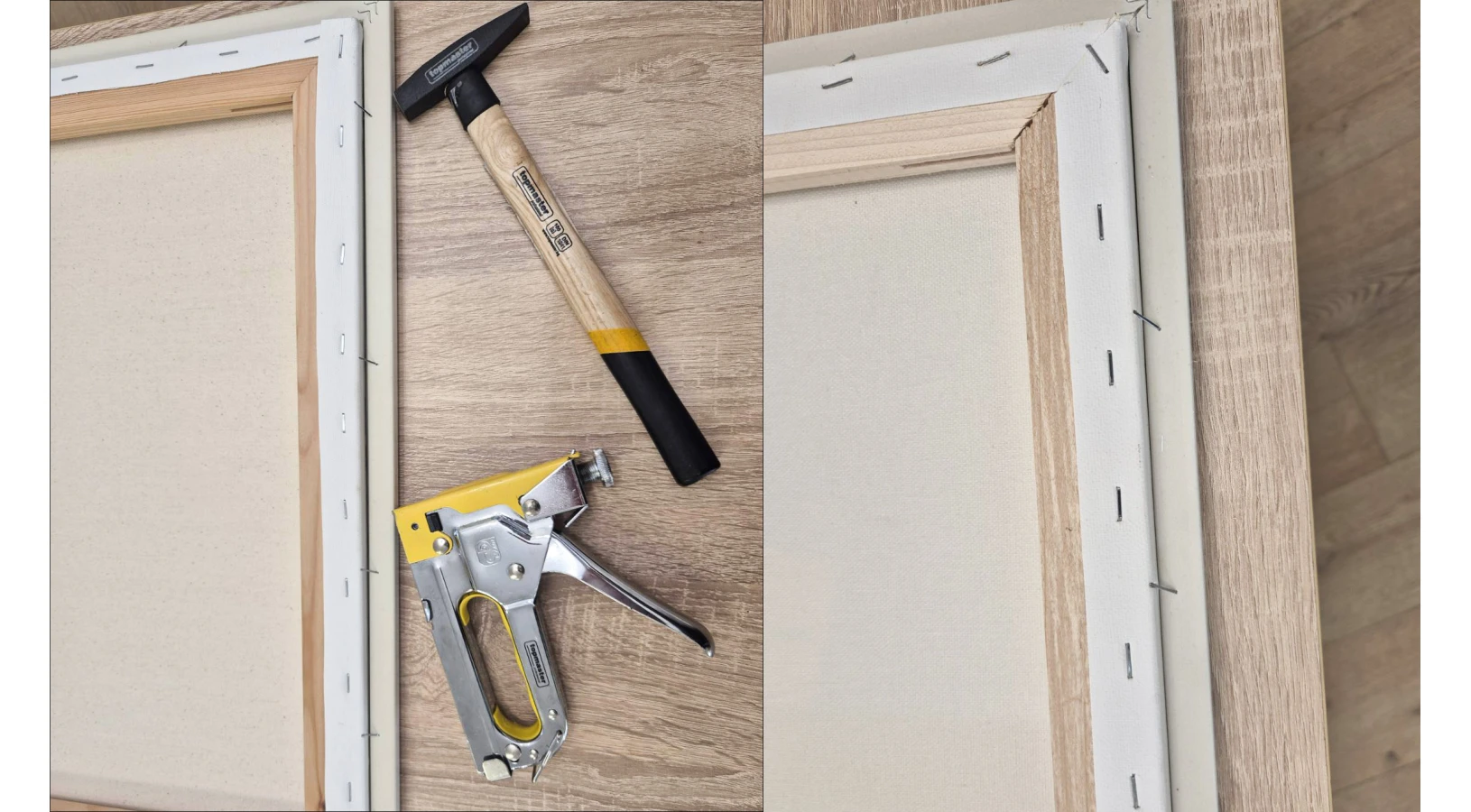
- Tools: Hammer, pliers, tape measure, picture hanger with mini nails, manual stapler, and staples (1 mm thickness, 11.3 mm width, 7-8 mm leg length).
- Work Surface: A large, flat surface covered with a soft material to protect the frame and painting from scratches.
Steps for Framing:
- Prepare the Frame: Place the frame face-down on the work surface.
- Position the Painting: Insert the painting into the pre-assembled frame. If necessary, apply gentle pressure, but avoid forcing it to prevent damage.
- Fix the Painting: Using a manual stapler, secure the painting to the frame by placing staples on each side, ensuring they grip both the inner frame and the painting's stretcher. Avoid placing staples too close to the corners.
- Final Touches: Attach a hanger or “sawtooth hanger” to the back of the frame. Find the center of the top stretcher, mark it lightly, and secure the hanger with mini screws.
With the right approach, framing can be both practical and an enhancement to the beauty of any painting. Whether you choose a professional or handle the task yourself, the result should meet your aesthetic expectations.


Leave a Comment