


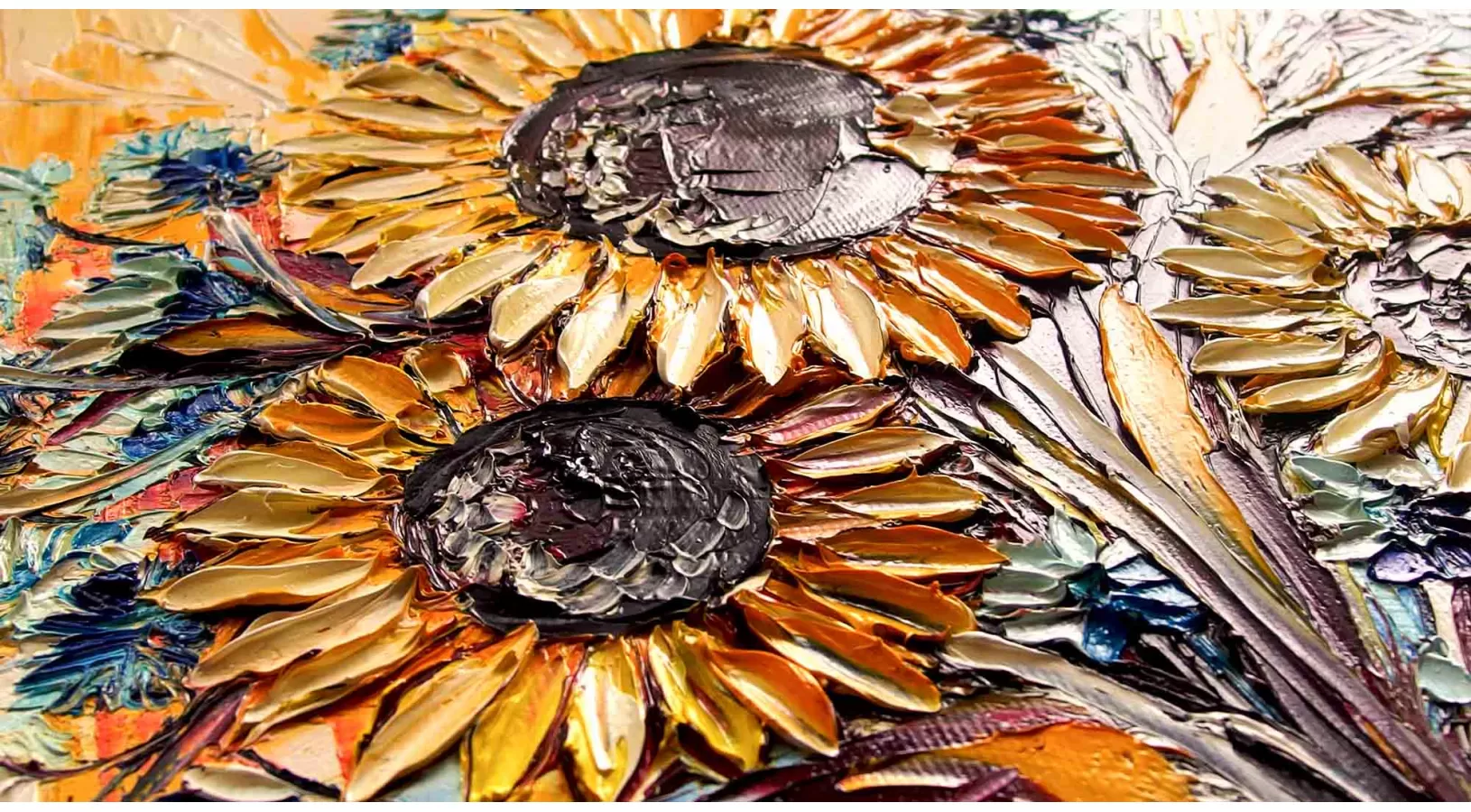
How to Preserve an Oil Painting
If you purchase an oil painting online and cannot hear storage recommendations from the gallery, here are some tips.
Oil paintings are among the most durable and easy-to-store creative products. They are not significantly affected by light and moisture, and they do not smear or wash off upon contact with water.
However, it is advisable to follow these recommendations.
It is best not to expose paintings to constant and direct sunlight, as certain colors may fade over time in such cases. This also depends on the type and brand of paint used. Not all oil paints have the same properties, nor do all colors. In one brand of paint, a particular color may be less durable, so we recommend that paintings not be left too long under direct sunlight.
Regarding storage in complete darkness, this is also not recommended. The base of oil paintings is linseed oil. Over the years, it may yellow slightly, but this process accelerates when paintings are kept in a dark environment for a long time. Thus, prolonged darkness can cause yellowing, especially of white colors.
Another important condition for the good preservation of oil paintings is that they should not be sealed under glass; the back should be left open so that the painting can "breathe," as artists say.
If you wish to apply a protective varnish to the painting or varnish for extra gloss, this should be done at least a full year after the painting has been completed. Oil paints dry very slowly in depth, and varnish applied on top could cause the paint to crack.
How to Preserve a Painting During Transport?
More serious care is needed for oil paintings when transporting them from the store or gallery where they were purchased to their permanent location, especially if they are larger in size. It is good to ensure packaging that does not allow bending, crushing, twisting, or—heaven forbid!—piercing and tearing the canvas. The corners and the frame itself, if there is one, should be packed particularly carefully.
At the Art Gallery "Daniela Stoykova," we offer secure packaging with protective wrapping during transport. This is especially necessary if the painting is sent by courier within the country or abroad. When we package paintings for abroad, we take extra care to ensure that the works will reach their recipient without damage.
When you transport your painting to your home or office yourself, such comprehensive external packaging is not required. It is important to know that the painting should always be held securely by the frame along its length without touching the canvas to avoid putting pressure on it. In other words, hold it by the wooden/sturdy part to which the canvas is attached. Otherwise, you may bend the canvas with your fingers, as it is made of fabric and is stretchable.
You should not rest the canvas of the painting against anything hard, such as the edge of stairs or other objects for the same reason. If you place a painting in the car on the back seat, position it so that it leans against the seat from the back/sturdy side. If putting it in the trunk, place it face/canvas up, and do not put anything on top of it.
It is important that the oil painting you have purchased is well-dried in the surface layer, as this affects successful transport. If the painting is still wet, it could smear in places. However, it is not a problem to carry it if the paint underneath is soft or sticky. This can continue for quite a while, sometimes over a year. It is essential that when you touch it with your hand, no paint should remain, but without applying pressure. Do not place heavy objects on a new painting that could press on it, and do not press with your fingers. Paint that is still not hardened may come off underneath. The sub-surface soft layer of paint can smear and be difficult to clean. (A new painting is one that has been painted within the last year.)
Oil paints dry slowly and are affected by atmospheric conditions—during winter and summer, for example, the drying time of the surface layer is different; in winter it is longer, around 3 weeks, while in summer it is shorter, around 2 weeks. This is because oil paints have different compositions and structures; they have volume and allow layering to achieve relief in the image.
For the advantages of oil paintings, learn more HERE
How Long Does an Oil Painting Take to Dry?
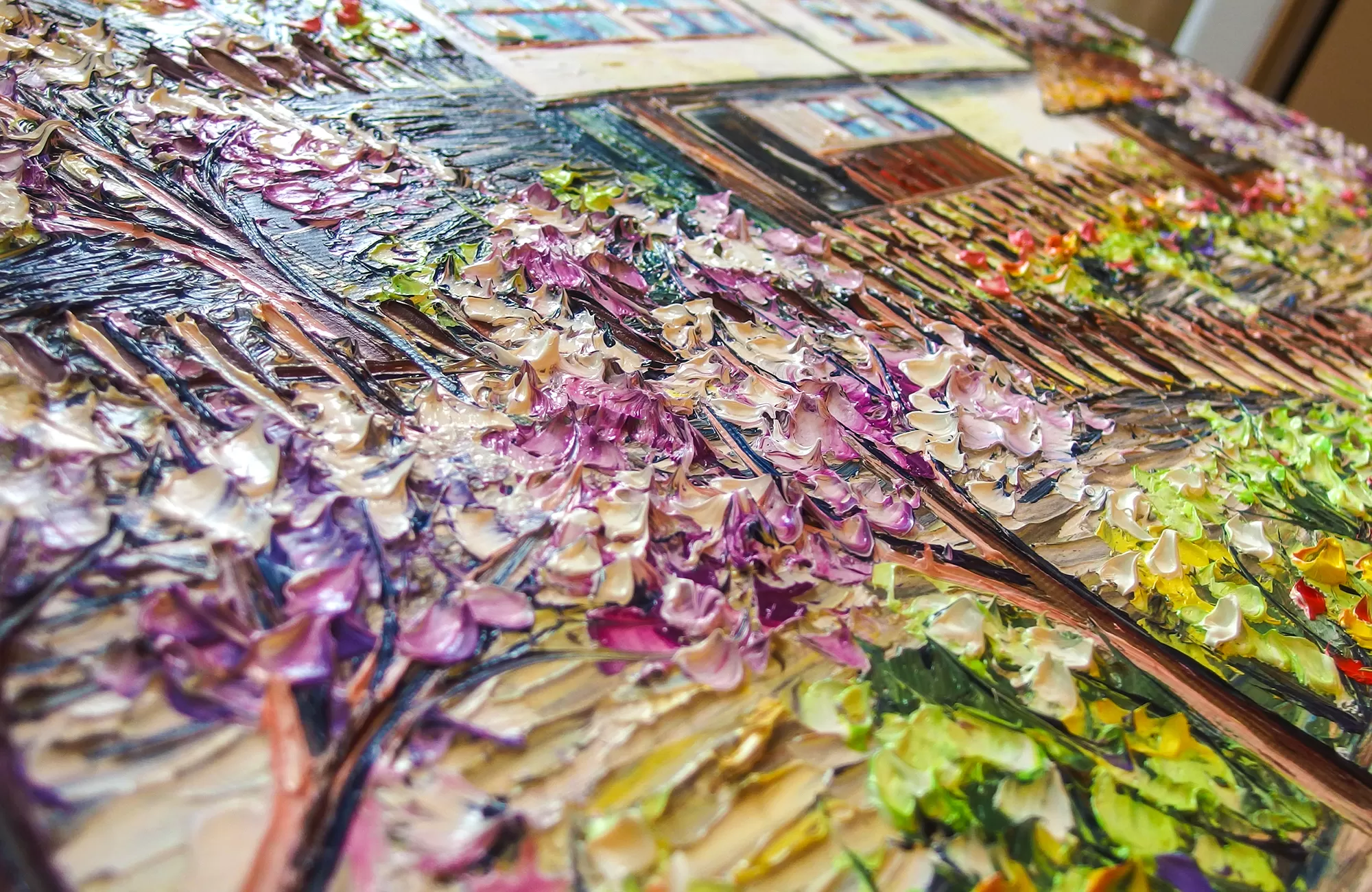
In this painting, you can see the structure of the oil paint up close. It is quite voluminous and textured, especially in abstract paintings. It reflects light and appears shiny in places, becoming completely hard after about a year, and sometimes longer, while maintaining its volume during hardening. Before it dries well, oil paint can be slightly sticky and soft when pressed. Be careful not to press your new oil paintings, as this may cause an underlying layer of paint to come out that smears and is difficult to clean.
In general, there is no need to worry about storage because oil paintings are indeed quite durable. The pigments are strong and resistant to light.
If you will still store a painting in a given place long-term, it is advisable to follow the above recommendations.
If you have difficulties regarding hanging paintings in your home or office, explore the various methods for hanging paintings HERE.
Check out the online exhibition in the month of women - “For the Ladies with Love” by artist Daniela Stoykova.


Leave a Comment