



How to Choose Oil Paintings for the Home
The home is the place where we spend the most time during the day. And, of course, it is the most precious and intimate place for us. In it, we relax and enjoy our free time, invite guests, and carry out our daily activities. Therefore, it is important that we feel good and cozy in our home. We need to choose furniture, paintings, and decorative elements that meet our needs and tastes.
This article aims to provide practical advice on how to choose oil paintings for our home.
What are Oil Paints?
First, let’s clarify what oil paints are, with which artists have been painting their beautiful paintings for centuries. You probably know that most creators paint paintings with oil paints, but you may not know what they are made of and why they are called oils?
Oil paints are made from pigments mixed with oils that make them very durable and resistant. They are most often based on linseed oil. With oil paints, you can paint on various surfaces, but artists most commonly use a technique on special painting canvases, which are fabrics/canvases with a primed surface stretched over a wooden frame. These paintings are known as: the oil-on-canvas technique. The canvas can be cotton or linen, and the wooden frame gives it a thickness of a few centimeters. Oil paints are greasy and dense in structure, creating a specific relief when layered and drying while retaining their volume. Take a close look at some relief oil paintings by artist Daniela Stoykova in the oil painting gallery, and you will notice this characteristic relief.



Painting "Miniature with Roses". The photo shows the specific relief of oil paints, taken up close
Why are Oil Paintings Better than Acrylic Paintings?
Acrylic paints are a type of water-based paint that bind not with oils but with resins. They dry very quickly, within an hour, and are less harmful in terms of fumes during work. When oil paints dry, they retain their volume and relief, which gives a certain texture to the painted painting. It appears relief and makes it more interesting and beautiful. Acrylic paints lose some of their volume after drying and become flat. To remain voluminous, acrylic paints are mixed during painting with additional pastes that build volume and texture, known as structuring pastes. Another advantage of oil paints is that they allow for much smoother transitions of colors, generally have brighter and higher quality pigments, and do not lose their color properties, unlike acrylics, which slightly change their tone when drying. Oil paintings have been tested and preferred since ancient times. Acrylic paints appeared relatively recently, in the first half of the 20th century.

Oil painting "Fantasy 2", 40/60 cm, artist Daniela Stoykova.
Oil Paintings or Acrylic Paintings?
- Oil paintings have higher quality and richer pigments and brighter colors.
- Oil paintings have a natural relief and texture.
- The colors of oil paintings are more durable.
- Oil paintings dry much more slowly and are more difficult to produce.
- Oil paintings are of higher quality and more expensive than acrylics.
- Acrylic paintings tend to look flatter unless additional texture elements are used.
- Acrylic paintings do not have the natural sheen of oil paints; a varnish is applied after drying to achieve gloss.
- Acrylic paintings dry within half an hour to an hour, while oil paintings take several weeks or months, depending on the thickness of the paint layer applied.
How to Choose an Oil Painting?
- Trust your inner voice. You will recognize your painting when you see it. It is important that something in it touches and impresses you. You do not need to be an "expert" to like a particular oil painting. Everyone has different tastes, and yours is just as important as the opinions and tastes of art historians. Art should be liked, not understood, and if you like a painting - that is completely enough. For you, it is number one, and it is worth it!
- Match the oil painting with your interior. The colors of the furniture and sofas are diverse: gray, blue, beige, white, dark brown, black, golden, or olive green, etc., and in art, anything is possible and permissible. If your sofa is beige or gray, it does not mean the painting above it has to be beige or gray; rather, it is preferable that it contrasts and stands out in your interior. If all the wall paintings are in these neutral colors, they would be terribly characterless! Let the painting be a highlight in your interior and create contrast in the room, making it bright and memorable!
- You may opt for warm or cool colors according to your sense of style and beauty. Instead of matching the color with the furniture, match the oil paintings in the room with decorative elements. Example: if your living room sofa is gray with yellow cushions, place a yellow vase on the coffee table or a gray vase with yellow flowers, and an oil painting with predominant yellow shades above the sofa. This way, the bright color will stand out, creating mood and contrast without being intrusive or irritating to the eye. It is enough for the main color from the painting to be present somewhere in the room to create a sense of balance and symmetry.
- You could combine an oil painting with warm colors with warm-colored furniture, and vice versa. Wall paintings with cool colors fit excellently in a black-and-white interior, as well as with furniture in grayish wood tones.
- You can choose an oil painting that combines warm and cool colors simultaneously and is built on the principle of contrast. This work can be combined with a diverse interior.
- Explore our online art store Sofia, where the artworks are categorized for every taste.
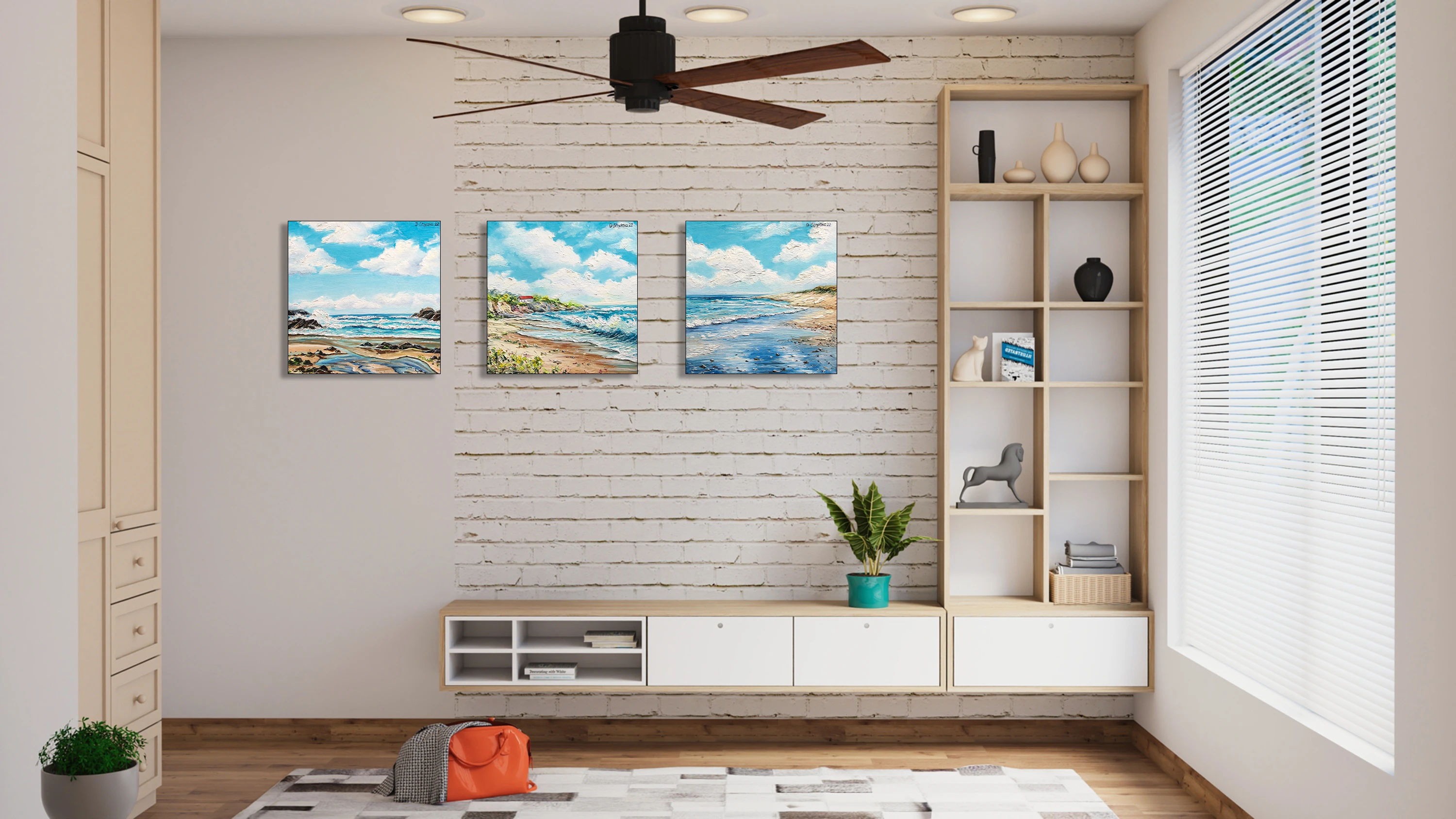
If you have a specific idea in mind – do not hesitate to contact us. Artist Daniela Stoykova creates custom paintings. Contact form, phone.
If you would like to see specific suggestions visually, take advantage of the service Interior solutions for your home.
Which Colors are Warm and Which are Cool?
Warm colors are more natural and commonly found in nature. These are the colors of the sun, fire, autumn leaves, summer fields, and beach sand. They can be mixed or pure and generally create a feeling of warmth. These are earthy colors. Yellow, red, brown, beige, orange, olive green, ochre, golden, etc.
Cool colors are the opposite of warm ones. These are the colors of snow, ice, the cold sky, night, water, the sea, and create a feeling of coolness. Cool colors are blue, green, purple, pink, and others. Some colors can be both warm and cool depending on their shade, such as green and pink. Some warm colors may have a cool tint. The cool color palette in the interior has a refreshing effect and improves concentration. Green has a calming and relaxing effect, just like greenery in nature, especially light green.
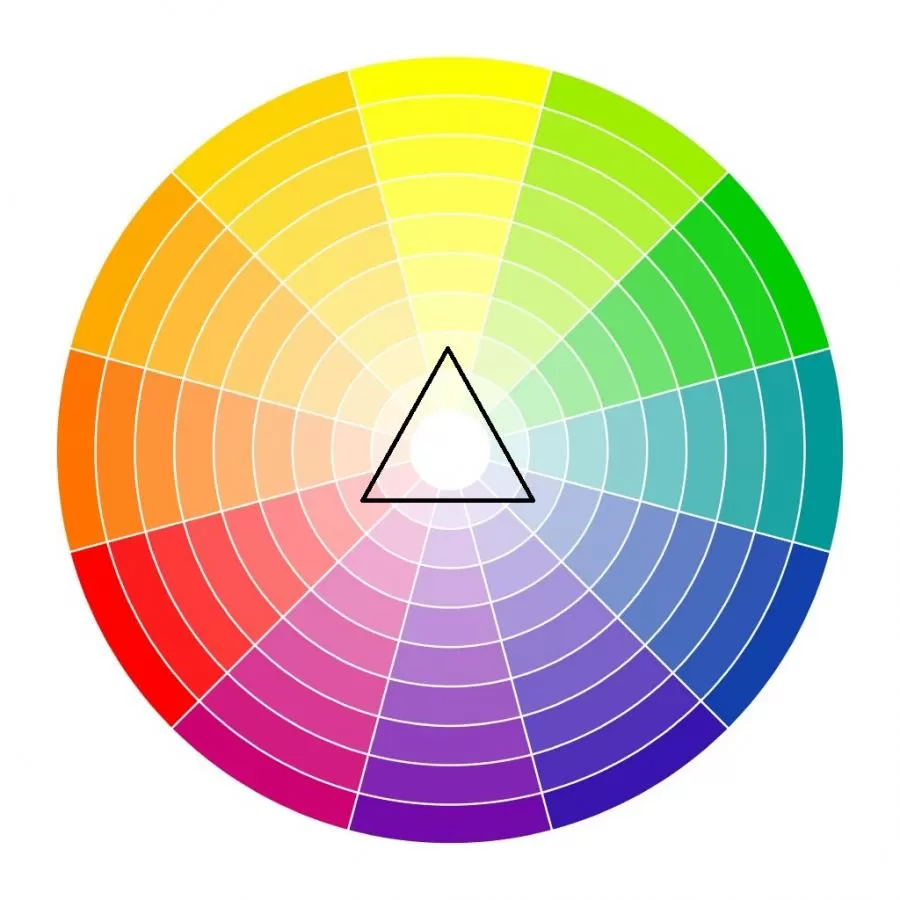
Color wheel: Warm colors - on the left, cool colors - on the right


Leave a Comment